Transparency: links marked (*) are affiliate links — if you buy through them we may earn a commission at no extra cost to you. It doesn't change our recommendations.
Last updated: May 2026 · Product prices and ASINs last verified on 2026-05-22. Related guide: Build your own 2000W DIY solar setup.
Last Tuesday at 3 AM, Octopus Energy paid me 4 pence per kWh to use electricity. Not joking — that’s what plunge pricing on Agile means: when there’s so much wind blowing across Scotland that the grid can’t absorb it all, the wholesale rate goes negative, and Octopus passes that through to half-hourly customers like me. I had my battery scheduled to charge at exactly that hour. The whole 1 kWh storage filled up at a cost of minus 4p.
To be clear: I’m not running a fixed home battery installation. I’m using a £500 portable plug-and-play battery + a £15 Tapo P110 smart plug to do Agile arbitrage — charge during cheap-rate or negative-rate windows (typically 2–5 AM), discharge during the expensive 4–7 PM peak. (New to the tariff? Start with Octopus Agile explained.) No DNO notification, no G99 paperwork, no MCS-certified installer. Just a heavy box and an outlet timer.
⚠️ Safety disclaimer: This article shares my personal experience with a portable battery arbitrage setup on Octopus Agile. Descriptions may be incomplete or inaccurate, and tariff structures change frequently. You build at your own risk. Working with 230V AC outputs requires basic electrical awareness. All recommended units have RCD protection on their UK 3-pin BS 1363 outputs — never bypass that with long extension cords. For any installation tied to the main consumer unit (fixed batteries, hybrid inverters), G98/G99 compliance and an MCS-certified installer are required by ENA regulations.
Quick decision: Portable arbitrage or fixed battery install?
| Your situation | Better choice |
|---|
| You’re on Octopus Agile or considering it | Portable battery + smart plug |
| You rent your flat / can’t drill walls | Portable plug-and-play |
| You want fastest setup (one evening) | Portable |
| You want to back up an EV charger or electric shower | Fixed installation (electrician needed) |
| You have existing solar PV and want to add storage | Hybrid: portable for peak shaving, fixed for full export |
| You want £8,000+ install with whole-home automatic transfer | Fixed installation with G99 paperwork |
| You’re on a standard fixed tariff (no Agile) | Battery arbitrage less valuable — wait for Agile signup |
| You’re worried about crimping wires | Portable (no wiring needed at all) |
Most renters, flat dwellers, and Agile customers end up on the portable side. The economics work out as long as you actually USE the scheduling (more on that below).
My setup at a glance
Goal: shift roughly 1–2 kWh of daily peak-hour consumption (4–7 PM, when Agile peaks above 28p) onto cheap-rate charging (2–5 AM, when Agile drops to 8–15p, sometimes negative). Setup comparison from Amazon.co.uk (May 2026):
|
Feature
| Anker SOLIX C1000 Gen 2 ★ Recommended | EcoFlow DELTA 3 Plus | Jackery Explorer 2000 v2 | BLUETTI AC180 |
| Price | ~£499 | £699 | £1,061 | ~£599 |
| Capacity | 1.02 kWh | 1.02 kWh (expandable to 5 kWh) | 2.04 kWh | 1.15 kWh |
| Continuous output | 1,800W (2,400W SurgePad) | 1,800W (X-Boost 2,400W) | 2,200W | 1,800W (2,700W surge) |
| Mobility | Portable (11.3 kg) | Portable (12.5 kg) | Portable (17.5 kg) | Portable (17 kg) |
| App scheduling | Anker app — schedules ToU | EcoFlow app + Tapo plug | Jackery app — basic scheduling | Bluetti app |
| Best for | Entry-level Agile arbitrage | Modular growth path | Bigger storage for multi-day | Best AC charging speed |
For most UK Agile customers, Anker SOLIX C1000 Gen 2 is the sweet spot. It’s affordable, has the deepest 4.7★ rating with 1,000+ reviews, and integrates with Tapo smart plugs for scheduling. If you want to grow to a 2 kWh+ system over time, EcoFlow DELTA 3 Plus is more modular (additional battery packs available).
Anker SOLIX C1000 or EcoFlow DELTA 3 Plus — which wins for Agile?
Short answer: For Agile arbitrage starters, Anker SOLIX C1000 (£499, 1.02 kWh, 1,800 W with 2,400 W SurgePad for the kettle) is the value pick. For modular expandability up to 5 kWh as your usage scales, EcoFlow DELTA 3 Plus (£699, 1.02 kWh + stackable extra packs) wins. Both are LiFePO4 with sub-30 ms UPS switchover. Above 1 kWh you’re paying for headroom you only use if you cycle more than once per cheap window.
Both are LiFePO4. Both have similar capacity. Both work for Agile arbitrage. Key differences:
- Anker SOLIX C1000 Gen 2 (£499): Best value. 1.02 kWh, fast-charging (fully recharges from grid in ~49 minutes — easily inside a 3-hour cheap window). Built-in app supports time-of-use automation. 5-year Anker warranty. The pick I’d buy first.
- EcoFlow DELTA 3 Plus (£699): Modular advantage. Can expand from 1.02 kWh to 5 kWh by adding extra batteries — useful if your Agile usage scales up. X-Boost lets you run 2,400W appliances briefly (kettle + toaster simultaneously). Comprehensive EcoFlow app.
- Alternative if sold out: Jackery Explorer 2000 v2 (£869, 2 kWh — bigger but pricier) or BLUETTI AC180 (£599, ~1.15 kWh with very fast 1,800W AC charging).
Which smart plug schedules Agile arbitrage cleanly?
Short answer: A TP-Link Tapo P110 (~£15 single, ~£30 for a 4-pack) is the dead-simple choice. Built-in energy monitoring lets you verify the exact kWh you drew during the 2–5 AM cheap window — useful if you want to audit the savings against your Octopus account. Skip the battery maker’s own scheduler if it’s clumsy: Tapo + a Google/Apple Home routine covers 95 % of arbitrage cases without lock-in.
Without scheduling, you’ll forget to charge during the 2–5 AM cheap window. The Tapo P110 (4-pack £29.99) makes scheduling brain-dead simple:
- Plug Tapo P110 into wall outlet
- Plug battery into Tapo P110
- In Tapo app: “Schedule” → “Charge ON 02:00 – 05:00, OFF rest of day”
- Forget about it for a year
The Tapo P110 also has built-in energy monitoring, so you can see exactly how many kWh you charged at off-peak and verify Agile savings in retrospect. £15 for a single, £30 for 4-pack — buy the 4-pack if you also have other devices to schedule (washing machine on Economy 7-style timing, EV charger off-peak, etc.).
When is a Shelly Pro 3EM worth the £150 + sparkie?
Short answer: Only if you want whole-home consumption verification, not just battery monitoring. The Shelly logs every kWh in/out of your house at 1-second resolution and tags each to its Agile half-hour slot — so you can document exactly what you saved (or what Octopus paid you on plunge nights). For Agile data-geeks and audit-friendly savings tracking, yes. For a plain “charge cheap, use later” setup, skip it and put the £150 toward a bigger battery.
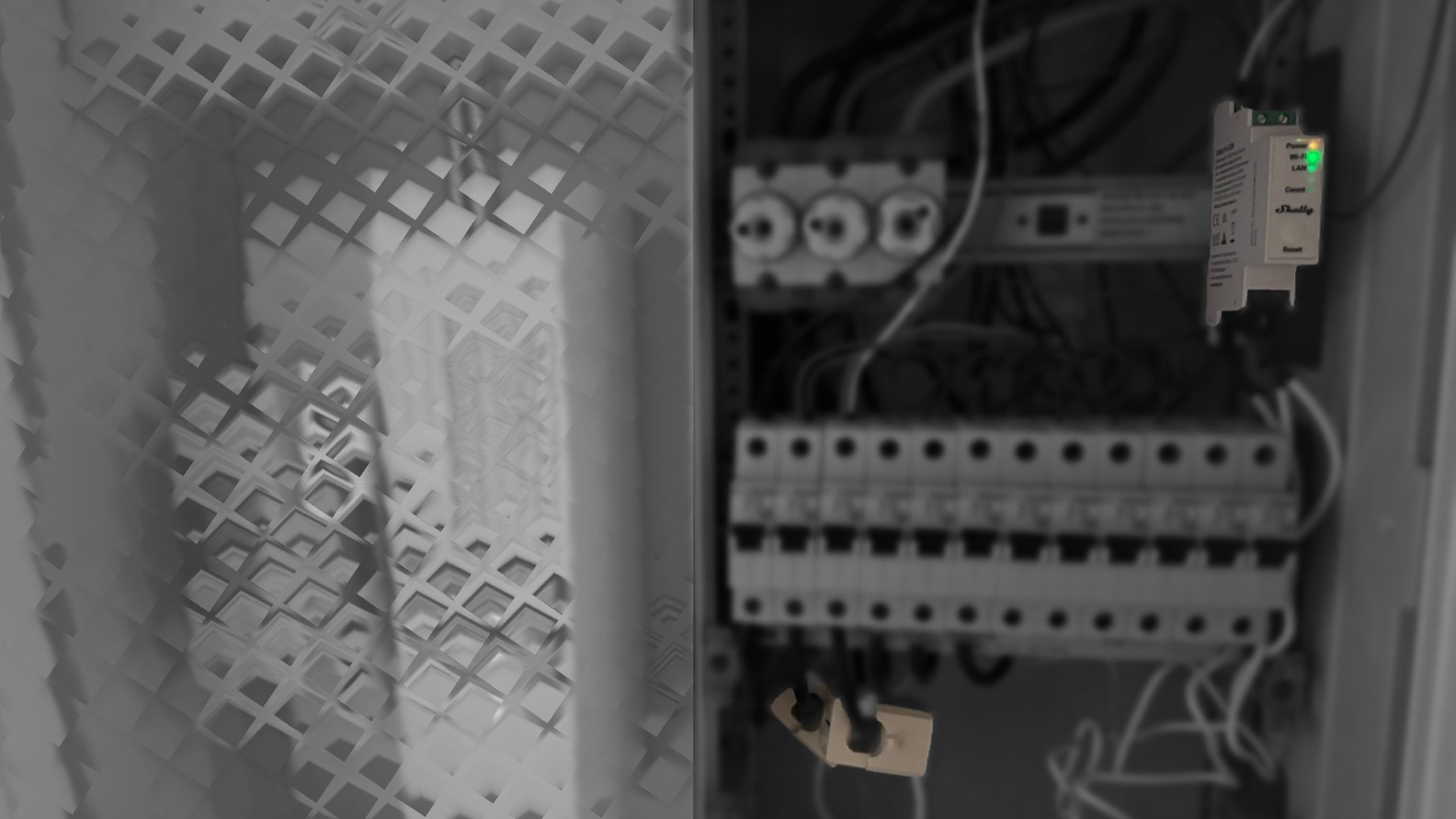
If you want to verify whole-home savings (not just battery savings), add a Shelly Pro 3EM 120A (£150) on your consumer unit’s DIN rail (a sparkie can fit it in 30 minutes). The Shelly logs every kWh in/out of your house in 1-second resolution, and you can see exactly which half-hour Agile slot you consumed in. Optional but powerful for Agile geeks — it’s how I documented the negative-pricing charges that ended up paying me to use power.
My biggest mistake — and why scheduling beats capacity
I bought the C1000 in week 1. Manually plugged it in to charge each evening. By the end of month 1: about £2 saved on Agile. Vastly underwhelming. I assumed I needed a bigger battery.
Wrong. The actual issue: I was charging at random times, not specifically during cheap-rate windows. Charging at 9 PM when Agile peaks at 30p means the battery cost me MORE per kWh than the grid I was supposedly replacing. Stupid.
The fix: £15 Tapo P110, scheduled to ON 02:00–05:00, OFF rest. Set it once on a Saturday morning. By month 2 (with the schedule): about £7 saved. By month 4: settling around £8/month — roughly the £90/year a 1 kWh battery can realistically shift. The battery hardware was never the bottleneck — my human inconsistency was.
Lesson: the £15 smart plug delivers more ROI than the £500 battery. Scheduling is not optional. Set it once on day 1.
When a fixed battery install still wins
Three cases where I’d recommend a proper installed home battery over portable plug-and-play:
- You want EV charging during Agile cheap-rate nights. A 7 kW EV charger is at the upper limit of portable inverters. You need a fixed system with proper 32A circuit and G99 compliance.
- You want full automatic whole-home backup during power cuts. Portable units have UPS-mode for the specific sockets they’re plugged into, but not whole-home. Fixed systems with ATS (Automatic Transfer Switch) give whole-home cover.
- You’re aiming at solar self-consumption maximisation. If you have 4 kWp+ rooftop solar and want to capture every solar kWh produced, a fixed hybrid inverter + battery is more efficient than retrofitting a portable.
For everyone else — flat dwellers, renters, Agile-curious homeowners — portable is the right entry point.
Everything I bought, with direct Amazon.co.uk links:
- Primary battery: Anker SOLIX C1000 Gen 2 — ~£499
- Modular alternative: EcoFlow DELTA 3 Plus — £699
- Bigger storage option: Jackery Explorer 2000 v2 — £1,061
- Smart plug 4-pack (essential for scheduling): TP-Link Tapo P110 4-Pack — £29.99
- Optional monitoring: Shelly Pro 3EM 120A — £150
Availability note: If a primary pick is sold out, the alternatives in each component section are direct drop-in replacements. Links marked with (*) are affiliate links; no extra cost to you.
Verdict — when Agile arbitrage pays off
After 4 months of running an Anker SOLIX C1000 + Tapo P110 schedule on Octopus Agile:
You’re in for arbitrage if:
- You’re already on Octopus Agile (or switching this month)
- You have a flexible load profile (most evening consumption can shift to battery)
- You rent or can’t install fixed equipment
- You want a few-year payback and a hands-off setup
- You don’t mind setting up a smart-plug schedule once
Go fixed install if:
- You need EV-charging-grade 240V loads backed up
- You want fully automatic whole-home transfer during cuts
- You have 4 kWp+ rooftop solar already
- You’re in your home for 15+ years
For me, the £528 setup is on track to pay for itself in around 5 years through Agile arbitrage — quicker on the nights Octopus actually paid me to charge. Modest and steady rather than a windfall, but with zero paperwork and nothing to install, it’s the easiest win on Agile.
Top Picks
Best Entry-Level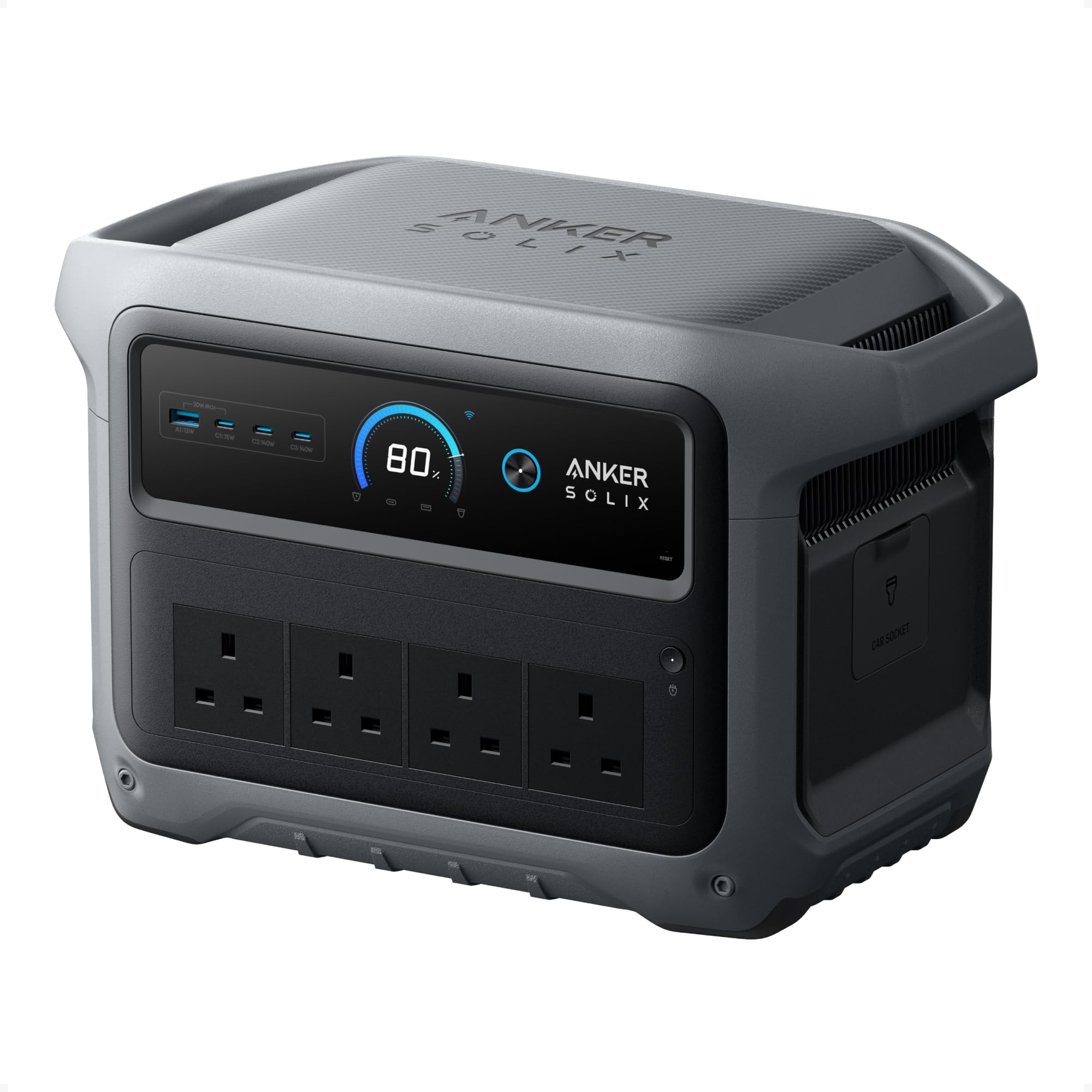
Anker
Anker SOLIX C1000 Gen 2 — 1.02 kWh Portable Power Station for Agile Arbitrage
- ✓4.7 ★ (1,071 reviews) — top-rated UK portable battery
- ✓1,024 Wh LiFePO4, 1,800W AC (2,400W SurgePad)
- ✓Fully charges in ~49 minutes — fits the 02:00–05:00 cheap-rate window
- ✓Anker app schedules ToU automatically
- ✓UK 3-pin BS 1363 sockets (floating-neutral design, not a fixed RCD)
- ✓5-year Anker warranty
Modular Growth
EcoFlow
EcoFlow DELTA 3 Plus — 1.02 kWh Modular Battery, Expandable to 5 kWh
- ✓4.5 ★ (199 reviews)
- ✓1,024 Wh LiFePO4, expandable to 5 kWh with extra batteries
- ✓1,800W continuous, X-Boost 2,400W for kettle + toaster
- ✓56-minute full charge
- ✓EcoFlow app integrates with Tibber and home energy platforms
- ✓5-year warranty
Bigger Storage
Jackery
Jackery Explorer 2000 v2 — 2.04 kWh Portable Power Station for Multi-Day Arbitrage
- ✓4.4 ★ (40 reviews)
- ✓2,042 Wh LiFePO4 — doubles capacity of C1000
- ✓2,200W continuous AC output
- ✓Compact 17.5 kg with carry handles
- ✓Jackery app supports basic ToU scheduling
- ✓Best for households shifting 2 kWh+ daily
Essential for Arbitrage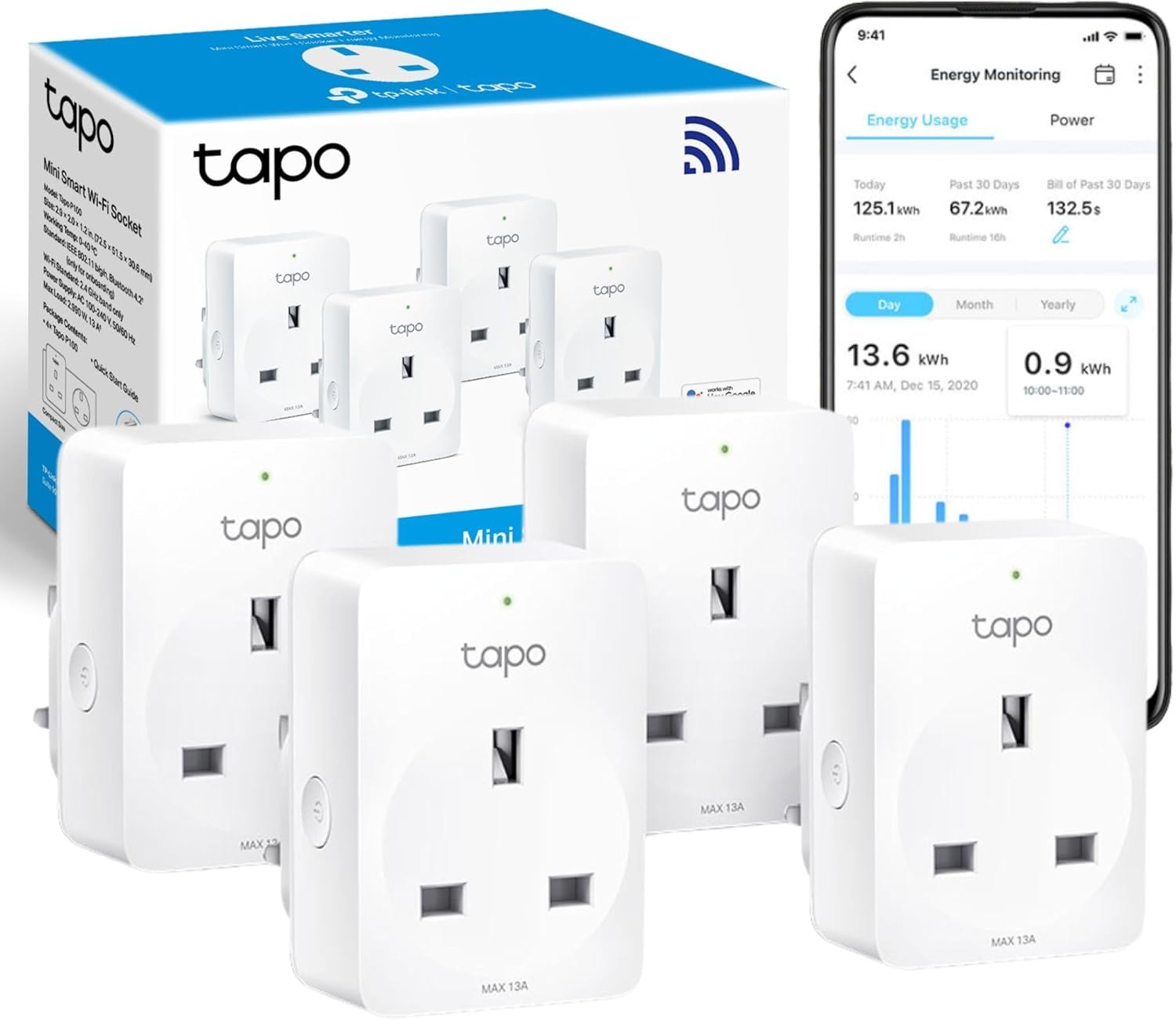
TP-Link
TP-Link Tapo P110 Smart Plug 4-Pack — Off-Peak Charging Scheduler
- ✓4.6 ★ (3,114 reviews) — best-seller UK smart plug
- ✓4-pack — schedule multiple Agile-arbitrage devices (battery, washing machine, EV charger)
- ✓Built-in energy monitoring (kWh tracking)
- ✓Compatible with Alexa, Google Home, Matter
- ✓£15 single also available; 4-pack is the better value
Optional Monitoring
Shelly
Shelly Pro 3EM 120A — DIN-Rail Whole-Home Energy Meter for Agile Verification
- ✓4.7 ★ (2,325 reviews)
- ✓DIN-rail mounted in consumer unit
- ✓Tracks Agile half-hour pricing alignment in real time
- ✓WiFi + LAN for low-latency data
- ✓Optional but powerful for Agile-geek-level monitoring
- ✓Required electrician for fitting (~30 min job)